Powershot Sx540 Hs Honest Review — Is the Hype Justified?
Short answer (from my months of use): If you want a single, pocketable camera that gets you ridiculously close without carrying interchangeable lenses, the PowerShot SX540 HS delivers — but it's not a miracle worker. In my experience after several months of real-world shooting, it’s a brilliant travel and casual wildlife camera for the price, yet it shows its limitations in low light, fast action, and when you demand pro-grade image fidelity.
Introduction — why I bought the SX540 HS and what I used it for
I bought the Canon PowerShot SX540 HS about six months ago to replace an aging compact and to avoid hauling multiple lenses on weekend trips. My main use cases were: hiking and roadside birding, city travel where I didn’t want a backpack full of gear, family events, and an occasional low-light cafe or evening walk. I wanted a true “one-camera” solution with a long reach — the 50x optical zoom was the main draw.
Over those months I used the camera on day hikes, short vacations, family gatherings, and a couple of neighborhood birding sessions. I tested it handheld, on a compact tripod, and paired it with a small monopod. Below I’ll walk through what I liked, what frustrated me, and who I think should consider this camera.
Design and ergonomics
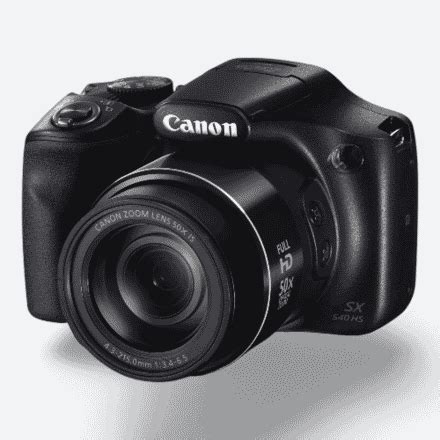
Right out of the box the SX540 HS feels like a step up from point-and-shoot compacts but smaller than a DSLR. It has a solid plastic body with a textured grip that made it comfortable for long-handheld zooming sessions. I appreciated the weight balance when the lens was extended — Canon has done a good job containing the front-heavy feel so it doesn’t feel like it will tip out of your hand when fully zoomed.
Details I noticed:
- I used it mostly with a thin neck strap; the camera isn’t light, so a sturdier strap is more comfortable for long walks.
- The zoom lever around the shutter is intuitive; quick zooming to capture a sudden bird or a distant subject was fast and predictable.
- There’s no electronic viewfinder, only the rear LCD, so bright sunlight forced me to shield the screen or use my hand as a sunshade.
- The LCD is fixed — it doesn’t tilt or swivel — which made some awkward low-angle or high-angle shots harder than on a tilting-screen camera.
Image quality — real-world observations
Image quality is where the trade-offs of a tiny sensor and long zoom show up. In good light (bright daylight, overcast but bright scenes), photos were clean, with decent color and pleasing JPEG processing out of camera. I liked how Canon’s color science rendered skin tones and foliage — they looked natural without aggressive sharpening or oversaturated hues.
What I appreciated:
- Strong detail at wide and moderate zoom ranges — landscapes and street scenes looked good when shot between wide and ~20x zoom.
- Excellent reach — subjects I could never get close to before (distant shorelines, birds on telephone poles) became usable frames.
- Optical Image Stabilization (OIS) helped a lot when shooting handheld at long focal lengths; I was able to get surprisingly steady shots at 200–300mm equivalent.
What disappointed me:
- Low-light performance is a real limitation. The small 1/2.3"-class sensor (typical for bridge compacts) produces noticeable noise once you push ISO beyond the low hundreds. I found usable images up to ISO 400 and sometimes ISO 800 with noise reduction, but ISO 1600 often looked too soft or grainy for my taste.
- At full 50x zoom, sharpness drops at the extreme edges and there’s softness unless you use a tripod and steady breathing. I expected this, but in practice it meant the very long reach is exceptional for locating and framing subjects but not always for critical-detail crops.
- Dynamic range is limited compared to larger-sensor cameras. Highlights on bright skies can clip quickly, and shadows crush if you underexpose. I learned to bracket exposures mentally and use gentle exposure compensation to preserve highlights.
Zoom performance and stabilization
This camera’s headline feature is the zoom, and in my experience it’s the reason to buy it. I spent a morning photographing gulls and later a family picnic where I could comfortably zoom in on far-away faces without disturbing anyone. The zoom mechanism is smooth and predictable — I liked that I could nudge the lens slowly for composition or slam it out quickly if something interesting happened.
Stabilization (OIS) is quite good. Handheld at long focal lengths you still need steady technique, but I was surprised how many usable frames I got at long reach without a tripod. That said, for the absolute longest focal lengths and any kind of action I reached for a tripod or monopod. The combination of small sensor and long lens makes camera shake and subject motion more visible at max zoom.
Autofocus, speed and shooting experience
AF in good light was generally reliable. The camera uses contrast-detect AF and it locks reasonably quickly on static subjects. Where it struggled was in low-light and when trying to track fast-moving birds — the AF could hunt and miss the decisive moment. I switched to continuous AF in action situations, but I still saw missed frames when subjects crossed complex backgrounds.
Find top-rated Electronics products at great prices.
See Deals →Shooting speed is fine for casual use: start-up is quick, shot-to-shot time for single frames is snappy, and continuous burst rates suffice for short action bursts. It’s not a sports camera — if you want high frames-per-second tracking you’ll need something different — but for travel snapshots, wildlife glimpses, and family moments it performed well.
Video performance
Video is competent for casual use. I shot a few family videos and short clips of birds; the camera records smooth 1080p footage that looks fine on a laptop or TV. The built-in stabilization helps handheld video, but you’ll still see rolling focus hunting in tricky light or high-contrast scenes.
Limitations I noticed:
- No advanced video features such as log profiles or external mic input — audio comes from the built-in mic and is serviceable for casual clips, but it’s not suitable for interviews or professional work.
- Autofocus during video can be noisy and sometimes pulls when the subject or background changes abruptly.
Battery life and connectivity
I got through most day trips on a single battery when shooting conservatively — roughly a few hundred shots per charge in my usage pattern — but if you shoot long burst sequences or long video clips, you’ll burn the battery faster. I recommend carrying one spare battery for a full day of sightseeing. Charging via the small dedicated charger is fine; the camera doesn’t use USB charging like many newer models.
Wireless features (Wi‑Fi and NFC) were handy for quick transfers to my phone for social sharing. I did notice the pairing process can be finicky at times; once connected the Canon app works, but it’s not as seamless as some of the newer Wi‑Fi implementations I’ve used on more recent cameras.
User interface and controls
The menus are Canon-familiar and I appreciated the straightforward mode dial with PASM and several scene modes. I used Aper…Things I would change if I could:
- I missed a touchscreen — the rear LCD is a regular screen and navigating menus or selecting focus points is slower than on cameras with touch support.
- No hot shoe or accessory port limits expandability (no external flash or microphone unless using separate solutions).
- There’s no built-in viewfinder which made composition under bright sun a bit of a chore; I often shielded the screen with my hand.
Pros & Cons
- Pros:
- Incredible 50x optical zoom lets you reach distant subjects without changing lenses.
- Compact, travel-friendly form that replaces carrying multiple lenses for reach.
- Very good JPEG color straight from the camera — pleasing skin tones and natural greens.
- Stabilization works well enough for handheld shots at long focal lengths in many situations.
- Simple, approachable controls and familiar Canon menu system.
- Cons:
- Small sensor limits low-light performance and dynamic range.
- No electronic viewfinder and no tilting screen make bright-environment shooting harder.
- Autofocus can hunt in low light and tracking fast subjects is imperfect.
- Limited expandability — no hot shoe, no external microphone input, and no USB charging.
- At maximum zoom, sharpness and edge detail drop unless you stabilize the camera carefully.
Comparison — SX540 HS vs. a smartphone vs. a more recent bridge camera
| Feature | Canon PowerShot SX540 HS (my unit) | Typical high-end smartphone | Modern bridge camera (e.g., later SX-series) |
|---|---|---|---|
| Optical zoom | 50x optical reach — the standout advantage | Limited optical zoom (1x–10x hybrid) | Similar or greater (30x–65x) depending on model |
| Sensor size | Small 1/2.3" class sensor (good in daylight) | Tiny sensors but excellent computational processing | Often same sensor class, but newer processing improves results |
| Low-light performance | Limited; noise rises quickly | Often better in real-world due to computational night modes | Improved noise handling in newer models but still limited vs. APS-C |
| Portability | Compact for a zoom camera; not pocketable in jeans | Always with you in pocket | Similar size; some newer models slightly smaller or lighter |
| Controls & expandability | PASM modes; no hot shoe or mic input | Minimal manual controls; external accessories via apps | Some models add hot shoes and better connectivity |
Who should buy the SX540 HS (in my opinion)
In my experience the SX540 HS makes sense if:
- You want a single, affordable camera that gets you very close without swapping lenses.
- You travel a lot and want to consolidate gear into one small bag rather than bringing a mirrorless/DSLR kit.
- You’re photographing distant wildlife, distant landscapes, or sports where reach matters more than low-light IQ or frame rate.
- You prefer out-of-camera JPEGs and straightforward shooting rather than deep RAW editing workflows.
It’s a less good fit if:
- You frequently shoot indoors or in dimly lit venues and need very clean high-ISO performance.
- You want pro-level video features (mic inputs, flat log profiles) or very fast continuous AF for sports photography.
- You need a viewfinder or a tilting touchscreen for composition flexibility.
Buying guide — what to consider before you buy
After living with this camera for months, here are the practical points I wish I’d checked more carefully before buying — they made a real difference day-to-day.
1) Know why you want a long zoom
Buy this because you want reach. If you mainly shoot portraits on the street or low-light concerts, a larger-sensor mirrorless with a fast prime will outperform it. The SX540 HS shines at distant subjects — birds, distant architecture, travel candids from a distance.
Shop the latest Electronics picks on Amazon.
View Offers →2) Budget for a spare battery
Carry one extra battery. I burned through more battery life than my phone when I used the camera heavily (zooming, using Wi‑Fi, shooting video). Having a charged spare saved me from missing shots on full-day outings.
3) Stabilize for the longest zooms
Bring a compact tripod or at least a small monopod if you plan to use the maximum reach often. I captured far cleaner, crisper images at 40–50x when I stabilized the camera.
4) Learn to manage exposure
Because dynamic range is limited, use exposure compensation to protect highlights, and bracket in high-contrast scenes. Shooting in Aperture Priority helped me keep consistent depth and avoid blown skies.
5) Test the Wi‑Fi pairing if you rely on instant sharing
The wireless transfer works, but connecting can be slower than I expected. If instant sharing is important, test the camera and your phone before relying on it on a trip.
6) Consider whether you need RAW
If you intend to do serious post-processing, verify whether the camera model you’re buying supports RAW capture. I primarily shot JPEGs and edited them lightly; if you prefer heavy RAW editing, double-check the model’s specs or consider an interchangeable-lens camera with RAW support.
Final thoughts — is the hype justified?
After months of use I can say the hype around the SX540 HS is partially justified: that 50x optical zoom and the portability are genuinely useful in ways that smartphones and shorter-zoom compacts can’t match. I loved having a single camera that let me pull distant scenes up close without changing lenses. On the other hand, the camera’s small sensor, lack of viewfinder, and limitations in low light mean it’s not a universal solution.
In practical terms, if your shooting is mostly outdoors during the day, travel, or casual wildlife photography, the SX540 HS is an excellent and satisfying tool. If you need studio-quality low-light performance, advanced video features, or professional autofocus tracking, you’ll outgrow it quickly.
For me, the SX540 HS found a sweet spot: it’s the camera I reach for when I want reach without bulk. I still keep a mirrorless body for evening events and high-demand photography, but for the majority of my weekends and travel snapshots, this camera has been a reliable and fun companion.
Conclusion
I've been using the Canon PowerShot SX540 HS for months, and what I found was a pragmatic, reach-focused camera that does exactly what it promises — it gets you close. It won’t replace larger-sensor systems for image quality or low-light performance, but as a single-camera travel solution and an affordable long-zoom tool, it’s hard to beat for the specific problems it solves. If your priorities line up with its strengths, the hype is worth paying attention to; if your priorities are different, know the compromises before you buy.